
Brennan Furlong Architects — Public Realm & Civic Projects
Filter by Project Area
Filter by Project Type
include awards schema aggregate totals
Selected Public Realm & Civic Projects
Selected Public Realm & Civic Projects
Public realm projects occupy a distinct position within architectural practice. They sit between building, landscape, infrastructure and civic life, shaping how people move through, occupy and relate to shared spaces. At Brennan Furlong Architects, our public realm work is concerned with the social and spatial life of streets, parks, neighbourhood centres and community settings, and with the role architecture can play in making these places more coherent, inclusive and resilient.
In Dublin, the public realm is formed through a complex layering of streets, open spaces, institutions, transport routes and local centres. Some spaces are highly visible and heavily used, while others are overlooked, underused or constrained by fragmented planning and piecemeal development. Public realm projects often begin by recognising latent potential within these places: the possibility of stronger civic identity, better amenity, safer movement, more generous access to open space, or a clearer relationship between built form and shared ground.
Our public realm portfolio includes proposals shaped by urban renewal, place-making, civic amenity, landscape use and community infrastructure. These projects frequently operate across multiple scales at once, from the architectural detail of an edge condition or public-facing building to the wider structure of a street, park or neighbourhood. In each case, the aim is not simply to alter the appearance of a place, but to improve how it functions, how it is understood and how it supports public life over time.
We have a designed a number of Civic & Public Realm. Select examples include:
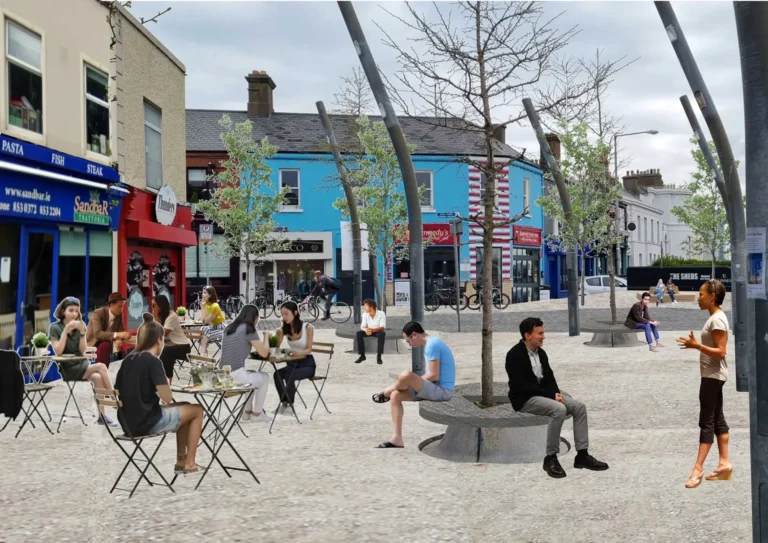
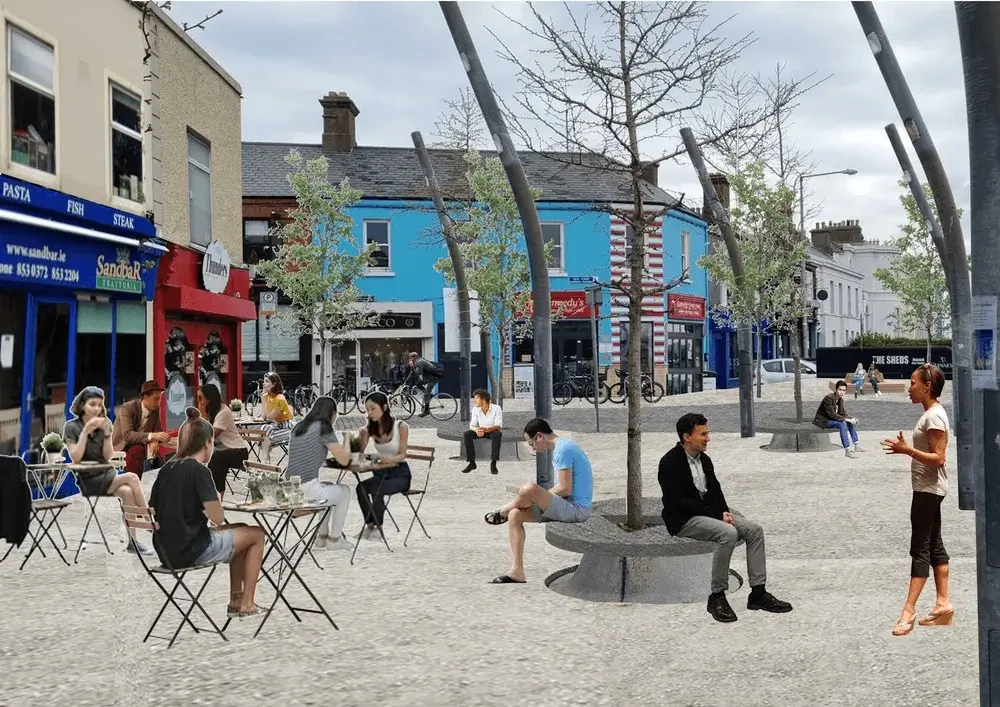
Vernon Avenue – What If
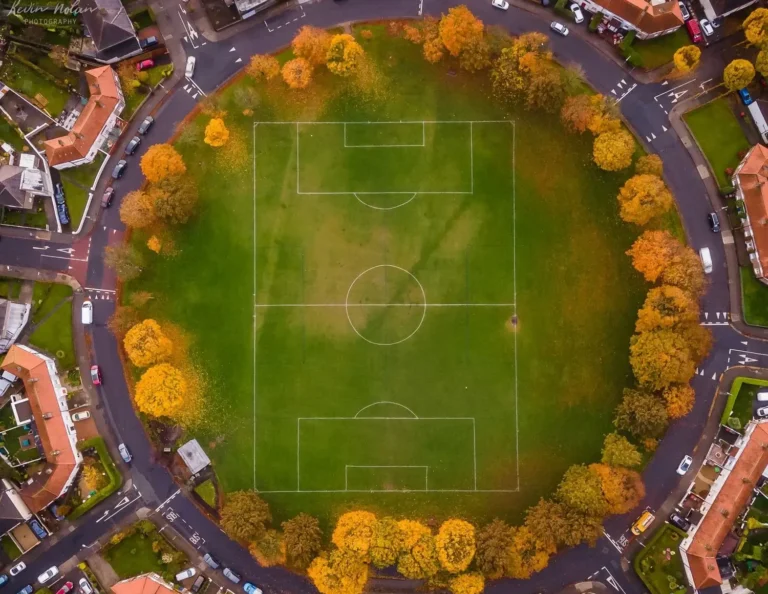
Common Ground – Marino
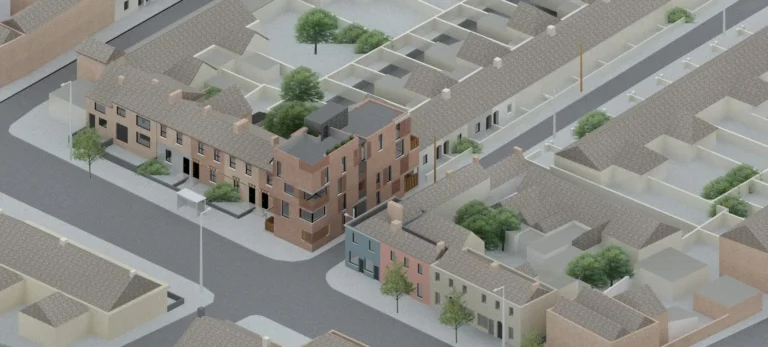
Urban Renewal
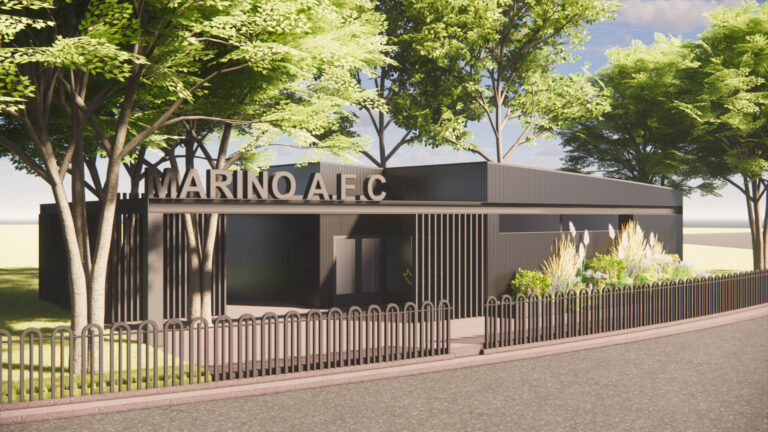
Marino AFC






Background
Public Realm and the City
The public realm is where architecture meets collective life most directly. Streets, parks, squares, routes, thresholds and civic edges all contribute to the experience of a city, shaping patterns of encounter, movement, orientation and belonging. In this sense, public realm design is not an optional layer applied after development, but a fundamental part of how urban places work.
In Dublin, public realm conditions vary significantly from one area to another. Some neighbourhoods benefit from strong spatial definition, mature planting and active local centres, while others are marked by fragmented edges, poor pedestrian experience, underused land or infrastructure that limits wider civic use. The challenge is often to work with what already exists — existing buildings, traffic patterns, open land, local activity and community memory — and to identify where targeted architectural or spatial intervention can have a wider effect.
Public realm projects often involve negotiation between competing needs. Access, movement, biodiversity, recreation, local commerce, safety and visual identity may all be present within the same site or neighbourhood. The task of design is to bring clarity to these overlapping demands and to produce spaces that feel purposeful, legible and durable. This requires not only formal design skill, but also careful reading of context and an understanding of how collective spaces are actually used.
Planning & Urban Context
Designing for the Public Realm
Public realm work is inherently shaped by context. Unlike a private building project, where the brief may be relatively contained, public realm proposals must respond to a wider field of conditions: adjoining streets, movement patterns, land ownership, maintenance responsibilities, environmental performance, local identity and the expectations of different user groups. In many cases, the success of a project depends on how well these relationships are understood at the outset.
In Dublin, public realm interventions may involve existing urban fabric, transport corridors, local shopping streets, parks, sports grounds or community facilities. Some sites sit at points of transition between different neighbourhoods or between residential, civic and commercial uses. Others act as landmarks, thresholds or areas of congregation. These conditions influence how a project should be framed and where architectural effort can be most effective.
Place-Making and Local Identity
One of the central aims of public realm design is to strengthen a sense of place. This does not mean imposing a superficial visual language, but understanding how the built environment already supports identity and how that identity might be reinforced through spatial improvement. Streets and public spaces become more meaningful when they are easier to navigate, more comfortable to occupy and more clearly related to the life of the surrounding community.
Streets, Routes and Urban Edges
Many public realm projects are concerned with the quality of movement through the city. Arterial roads, neighbourhood streets and transitional urban edges often have strategic importance but limited amenity value. Architectural and urban design interventions can help redefine these conditions by improving enclosure, orientation, pedestrian priority, public visibility and the relationship between buildings and the street. In some cases, a single intervention can act as a marker or civic anchor within a wider urban structure.
Parks and Shared Open Space
Public parks and green spaces play a critical role in the everyday life of the city. They support recreation, biodiversity, health, informal gathering and neighbourhood identity, yet many are under pressure from changing patterns of use, growing populations and limited infrastructure. Public realm work in these settings may involve new facilities, better year-round usability, improved access, clearer zoning of activities or a more ambitious understanding of how a park contributes to the wider urban landscape.
Community Infrastructure
Community buildings and civic facilities often sit at the intersection of architecture and public realm. A clubhouse, pavilion or local amenity building does more than accommodate a programme; it can also shape how people arrive, gather, orient themselves and participate in community life. In this sense, the design of local infrastructure should be understood not only as an architectural exercise, but as part of the making of shared civic space.
Research, Urban Change and Collective Space
Public realm architecture also depends on critical reflection. Questions of ownership, access, spatial standards and the relationship between public and private life are central to how cities evolve. Architectural research can play an important role in this area by examining how neighbourhoods change over time and how shared ground is shaped by social, political and economic forces. This broader way of thinking informs design decisions on the ground and helps situate projects within larger urban questions.
Our Approach to Public Realm Projects
Our approach to public realm projects begins with close observation of the existing place. We look at how a street, park or neighbourhood is used, how it is structured spatially, where its pressures and opportunities lie, and what forms of intervention are most likely to create lasting public value. This may involve architectural proposals, urban strategies, site analysis, design studies or collaborative work developed alongside community groups and local stakeholders.
We are particularly interested in projects where architecture can support collective life in a tangible way: by making public spaces more usable, more identifiable, more inclusive and better connected to the communities around them. In these projects, design must do more than solve a technical problem. It must help establish a stronger relationship between people and place.
Public realm work often requires thinking across building, landscape and city at the same time. It may involve questions of civic presence, movement, edge conditions, amenity, environmental resilience and long-term adaptability. We approach these questions through careful analysis, clear spatial thinking and a commitment to design that is both contextually grounded and publicly meaningful.
If you are developing a project involving civic space, community infrastructure, urban renewal, place-making or the improvement of shared public amenity, we would welcome the opportunity to discuss it.