
Brennan Furlong Architects —Education Projects
Filter by Project Area
Filter by Project Type
include awards schema aggregate totals
Selected Education Projects
Selected Education Projects
Education projects require architecture that is clear, adaptable and grounded in everyday use. Whether the setting is a school, learning environment, training facility or community-based educational space, the quality of the architecture can have a direct impact on how people learn, move, gather and focus. At Brennan Furlong Architects, we approach education projects with an understanding that these buildings must support both practical requirements and the wider social life of the institution.
Educational environments are often among the most intensively used building types. They must accommodate structured activity, circulation, supervision, accessibility, storage, durability and changing patterns of occupancy across the day and over time. At the same time, they should provide spaces that feel calm, legible and generous, with good natural light, clear organisation and a strong relationship between building and site.
Our education work is shaped by the specific needs of the users, the character of the existing setting and the broader role the building plays within its community. Some projects may involve new accommodation, while others may focus on adaptation, extension, reorganisation or environmental upgrade. In each case, the aim is to create architecture that supports learning in a practical, durable and lasting way.
We have worked on a number of school and education facility projects. Select examples include:
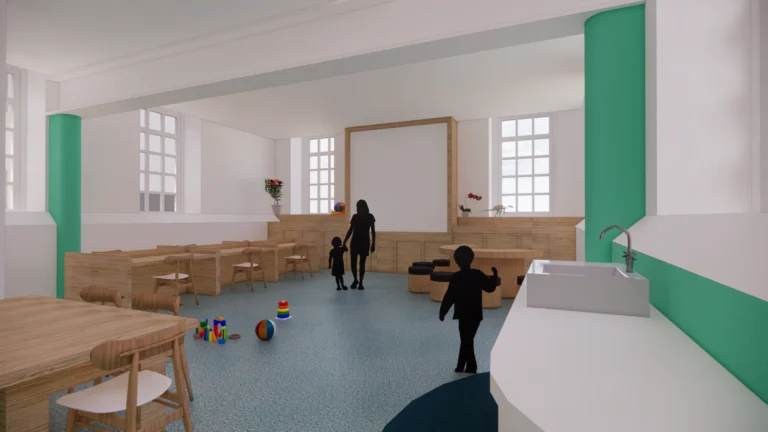
School Adaption
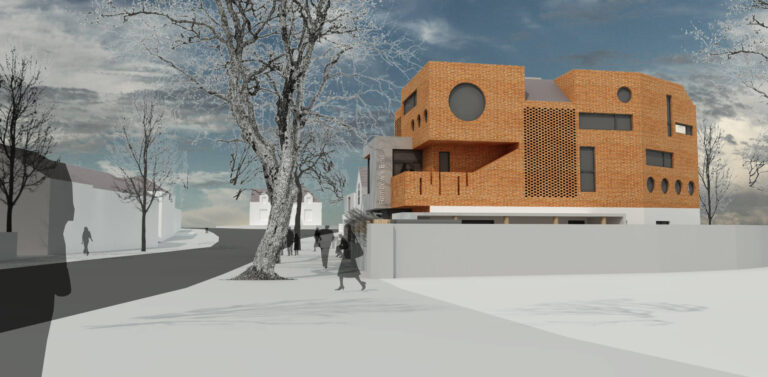
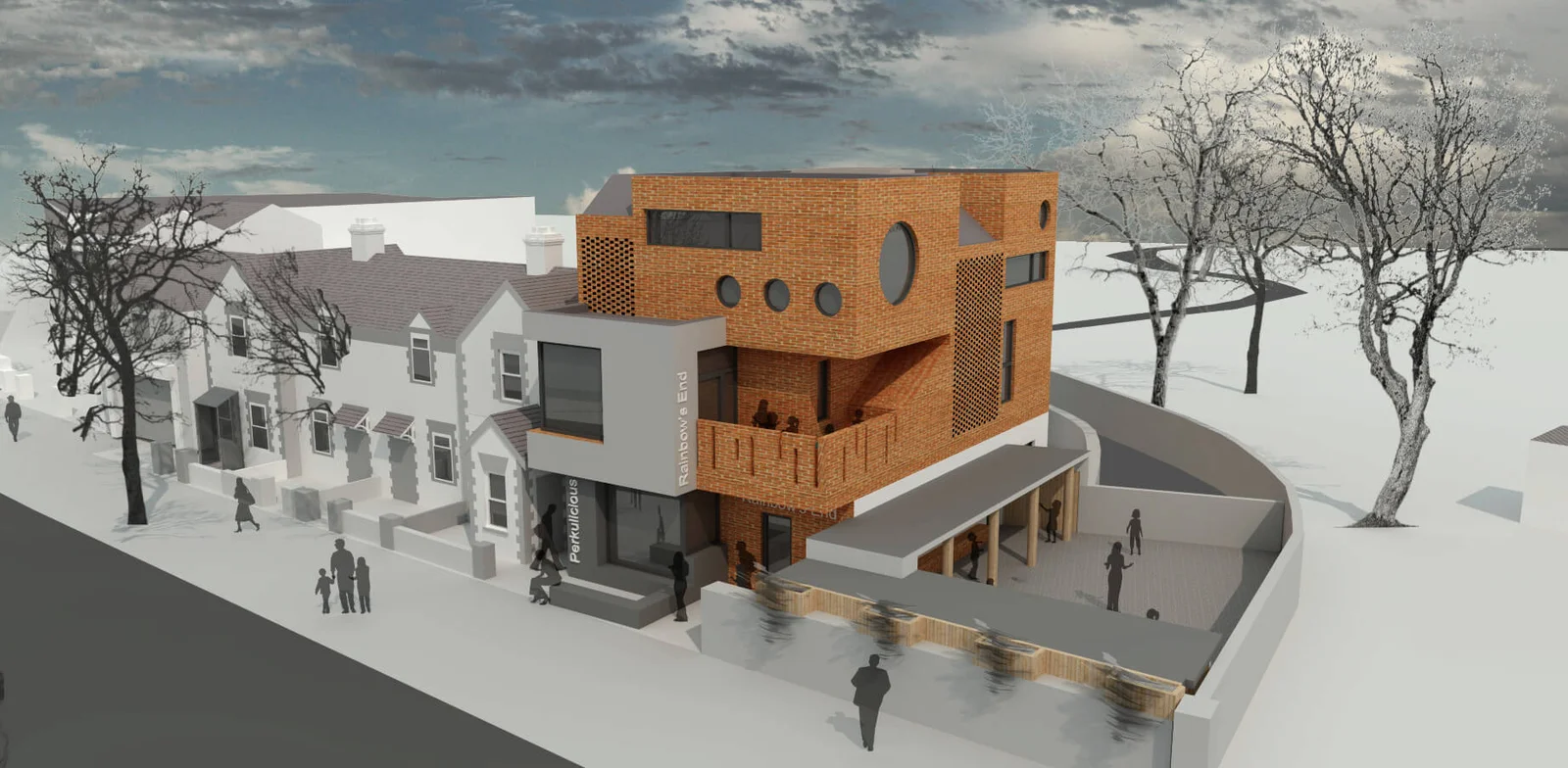
Raheny village creche























Background
Architecture for Learning Environments
Educational and school buildings must work hard. They often bring together classrooms, shared spaces, administration, circulation, staff areas, specialist functions and external amenity within a single coherent framework. The success of the architecture depends not only on technical performance, but on how easily the building can be understood and used by those who occupy it every day.
Good education architecture supports concentration, interaction and wellbeing. Natural light, proportion, acoustics, views, material quality and ease of movement all contribute to the experience of a learning environment. Even relatively modest interventions can have a meaningful impact when they improve clarity, comfort and the relationship between indoor and outdoor space.
In many cases, education projects also involve working within an existing campus, school building or established site. This requires careful attention to phasing, access, safeguarding, circulation and how new work relates to what is already there. The architecture should feel purposeful and coherent, whether it takes the form of a new building, an extension or the reworking of existing accommodation.
Planning & Site Context
Designing Education Architecture Projects
Education projects are shaped by a combination of operational, spatial and site-specific factors. These may include access and drop-off arrangements, safeguarding, wayfinding, relationships between age groups or user groups, external play or gathering space, and the long-term flexibility of the building. Early site analysis is therefore particularly important.
Some educational settings are urban and compact, requiring careful organisation within tight constraints. Others may have more generous external space but need to address landscape, circulation or the relationship between multiple buildings. In either case, the design process benefits from a close reading of how the site functions day to day and where architectural intervention can most effectively improve it.
Existing Buildings and Adaptation
Many education projects involve adapting existing buildings to support new forms of learning or increased demand. These projects can offer opportunities to improve circulation, daylight, accessibility and environmental performance without losing the value of the original structure. Careful analysis is needed to understand what should be retained, what can be reworked and where new additions may be appropriate.
Clarity, Movement and Supervision
External Space and Amenity
Outdoor space is an important part of education architecture. Play, informal gathering, movement between buildings and access to fresh air all shape how a learning environment is used. The design of thresholds, courtyards, landscape edges and circulation routes can therefore be just as significant as the design of the internal rooms themselves.
Durability and Long-Term Use
Educational buildings are high-use environments, and their materials and detailing need to perform accordingly. Durability, ease of maintenance and robustness are essential, but they should not come at the expense of atmosphere or spatial quality. Well-designed education projects can be both practical and uplifting, giving users spaces that are resilient in use and pleasant to occupy.
Environmental Performance
Environmental performance is central to the long-term quality of educational architecture. Good daylight, natural ventilation, thermal comfort and efficient building fabric all support both sustainability and everyday wellbeing. In existing buildings, retrofit and upgrading can significantly improve comfort and energy use. In new-build or extension projects, early environmental thinking helps establish a stronger framework for the building from the outset.
Our Approach to Education Architecture
Our approach to education architecture begins with how the place is used. We look closely at the routines, movement patterns, spatial pressures and environmental conditions that shape the daily life of the school building or facility, and we use that understanding to guide the design process from the earliest stage.
As architects, we work from feasibility and site analysis through to planning, design development and construction. We aim to create educational spaces that are clear, robust and well resolved, supporting both immediate functional needs and the longer-term life of the institution.
We are particularly interested in projects where thoughtful design can improve the experience of learning through better light, clearer organisation, stronger connections to outdoor space and more careful use of materials. Whether the project involves adaptation, extension, refurbishment or new construction, the goal is to create architecture that is practical, durable and generous in use.
If you are considering an education project, we would welcome the opportunity to discuss it.