
Brennan Furlong Architects — Healthcare & Medical Facility Projects
Filter by Project Area
Filter by Project Type
include awards schema aggregate totals
Selected Healthcare & Medical Projects
Selected Healthcare & Medical Projects
Healthcare projects require architecture that is calm, clear and responsive to care. Whether the setting is a nursing home, hospital, GP surgery, dental practice, clinic or another form of healthcare environment, the quality of the building has a direct effect on comfort, dignity, wellbeing and day-to-day use. At Brennan Furlong Architects, we approach healthcare architecture with an understanding that these projects must meet complex practical requirements while also creating spaces that feel humane, legible and enduring.
Healthcare buildings are often shaped by a particularly demanding set of conditions. Accessibility, safety, supervision, privacy, durability, environmental comfort and ease of movement all need to be addressed carefully from the outset. At the same time, the architecture should avoid becoming purely institutional in character. Good healthcare design supports care through light, proportion, material quality, clarity of circulation and a strong relationship between building and setting.
Our healthcare work includes projects where the demands of care are closely connected to the character of an existing building. In some cases, this involves working within older or historically significant structures that require both sensitive adaptation and practical upgrading. These projects call for a careful balance between preservation, functionality and the everyday experience of residents, staff and visitors.
We have delivered a number of healthcare and medical facility projects. Select examples include:
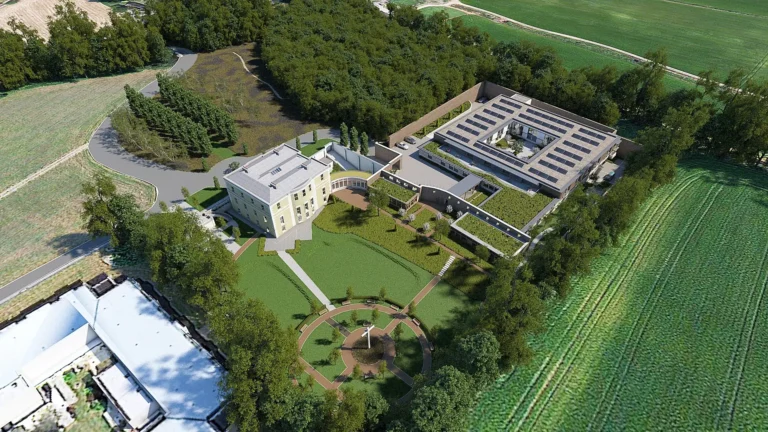
St. Doolaghs



























Background
Architecture for Healthcare Settings
Healthcare architecture is defined not only by its technical requirements, but by the experience it creates for the people who use it. A healthcare setting should feel easy to navigate, comfortable to occupy and supportive of both privacy and social connection. This is particularly important in residential care environments such as nursing homes, but it also applies to hospitals, dentists’ surgeries, GP practices, outpatient clinics and other medical settings where clarity, reassurance and ease of use are essential.
Designing for healthcare involves close attention to circulation, thresholds, light, acoustics, views, access to outdoor space and the relationship between shared and private rooms. Spaces need to work efficiently for staff and service requirements, but they must also support the wellbeing and dignity of patients, residents and visitors. The best healthcare environments are those in which practical performance and emotional quality are not treated as separate concerns.
Where healthcare projects involve existing or historic buildings, the architectural challenge becomes more layered. Older buildings may offer spatial richness, material character and a strong sense of identity, but they can also require significant adaptation to meet contemporary standards of accessibility, fire safety, servicing and environmental performance. In these cases, design needs to be careful, informed and measured, ensuring that the building can support modern healthcare use without losing the qualities that make it valuable.
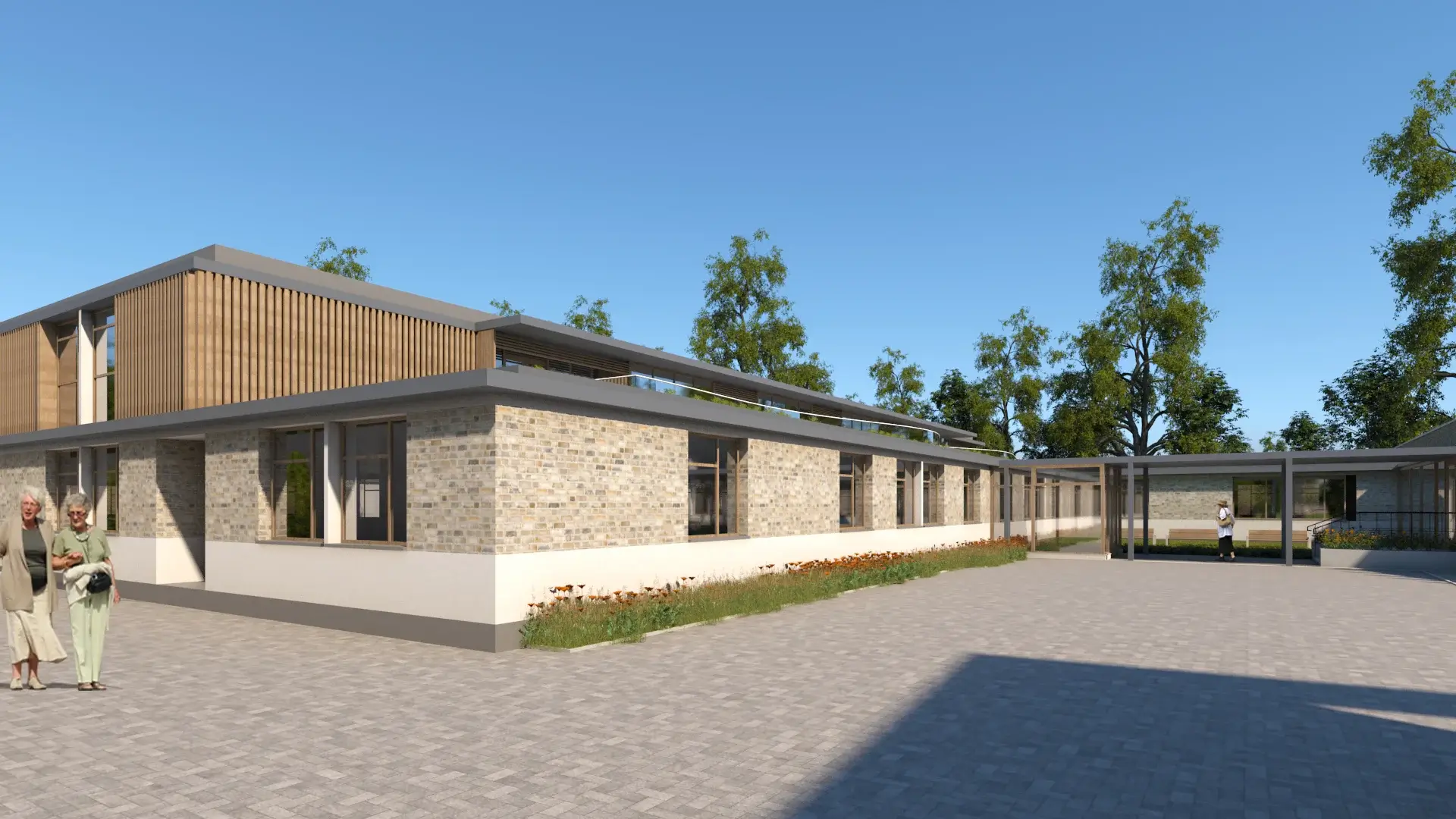
Planning & Site Context
Designing Healthcare Projects
Healthcare projects are often shaped by a combination of operational, regulatory and site-specific requirements. These may include access and drop-off arrangements, fire strategy, accessibility, servicing, circulation, overlooking, amenity provision and the relationship between care spaces and the surrounding landscape or neighbourhood. Early analysis is therefore especially important in establishing what is possible and where design effort can have the greatest impact.
Some healthcare settings are contained within existing institutions or adapted buildings, while others may involve new accommodation or extensions to support evolving care needs. This can apply equally to nursing homes, primary care settings, dental clinics, local medical practices and larger healthcare facilities. In each case, the architecture must respond carefully to both the internal functioning of the building and the wider character of the site.
Residential Care Settings
In residential healthcare environments such as nursing homes, architecture plays a central role in shaping everyday quality of life. The building must support comfort, accessibility, supervision and practical care, while also allowing for privacy, quiet, sociability and a sense of familiarity. Shared rooms, circulation spaces, entrances and outdoor areas all contribute to this experience and should be designed with care.
Clinics, Surgeries and Medical Practices
Healthcare architecture also includes smaller-scale medical settings such as GP surgeries, dental practices, consulting rooms and outpatient clinics. These projects often require a different type of spatial clarity, with careful management of reception areas, waiting spaces, treatment rooms, staff facilities and patient flow. Although more compact in scale, they still benefit from the same architectural principles: legibility, calmness, durability and comfort.
Existing Buildings and Conservation
Some healthcare projects involve buildings with architectural or historic significance. In these cases, adaptation must address both care requirements and the integrity of the existing fabric. Conservation-led healthcare projects often require careful judgement around what should be preserved, what can be altered and how new interventions can be integrated without undermining the character of the original structure. This type of work benefits from a detailed understanding of material condition, historic layout and the long-term use of the building.
Clarity, Accessibility and Movement
Healthcare buildings depend on clear spatial organisation. Routes should be legible for patients, residents, staff and visitors, and the relationship between entrances, shared spaces, private accommodation and service areas should support ease of use and appropriate oversight. Accessibility is fundamental, but clarity of movement is equally important in making a healthcare environment feel reassuring rather than confusing or overly institutional.
Amenity and Wellbeing
Natural light, views, quiet outdoor space and a clear relationship to landscape can all contribute significantly to the quality of a healthcare environment. Even where the project is modest in scale, careful attention to these elements can improve comfort, orientation and the overall experience of care. Amenity should therefore be understood as an essential architectural consideration rather than an optional addition.
Environmental Performance
Environmental performance is a key part of healthcare architecture. Thermal comfort, ventilation, daylight and durable material choices all contribute to long-term wellbeing and building performance. In existing buildings, upgrading the fabric and services can significantly improve comfort and efficiency, but these interventions need to be integrated carefully, particularly where the project also involves conservation considerations.
Our Approach to Healthcare Architecture
Our approach to healthcare architecture begins with the lived experience of the building. We look closely at how patients, residents, staff and visitors move through a place, how spaces relate to one another, how the building supports care in practical terms and how architecture can create a setting that feels calm, dignified and well resolved.
As architects, we guide projects from feasibility and site analysis through to planning, design development and construction. We work to ensure that healthcare environments — whether residential care facilities, clinics, dental practices, GP surgeries or other healthcare buildings — meet their practical requirements while also supporting comfort, clarity and long-term adaptability.
We are particularly interested in projects where thoughtful design can improve the quality of care through better spatial organisation, stronger connection to light and landscape, careful use of materials and a more considered relationship between old and new fabric. Where a healthcare project also involves conservation, this becomes a particularly rigorous architectural task: adapting a building for contemporary care while protecting the qualities that give it identity and permanence.
If you are considering a healthcare project, we would welcome the opportunity to discuss it.