
Brennan Furlong Architects — Dublin City Projects
Filter by Project Area
Filter by Project Type
include awards schema aggregate totals
Selected Dublin City Projects
Selected Dublin City Projects
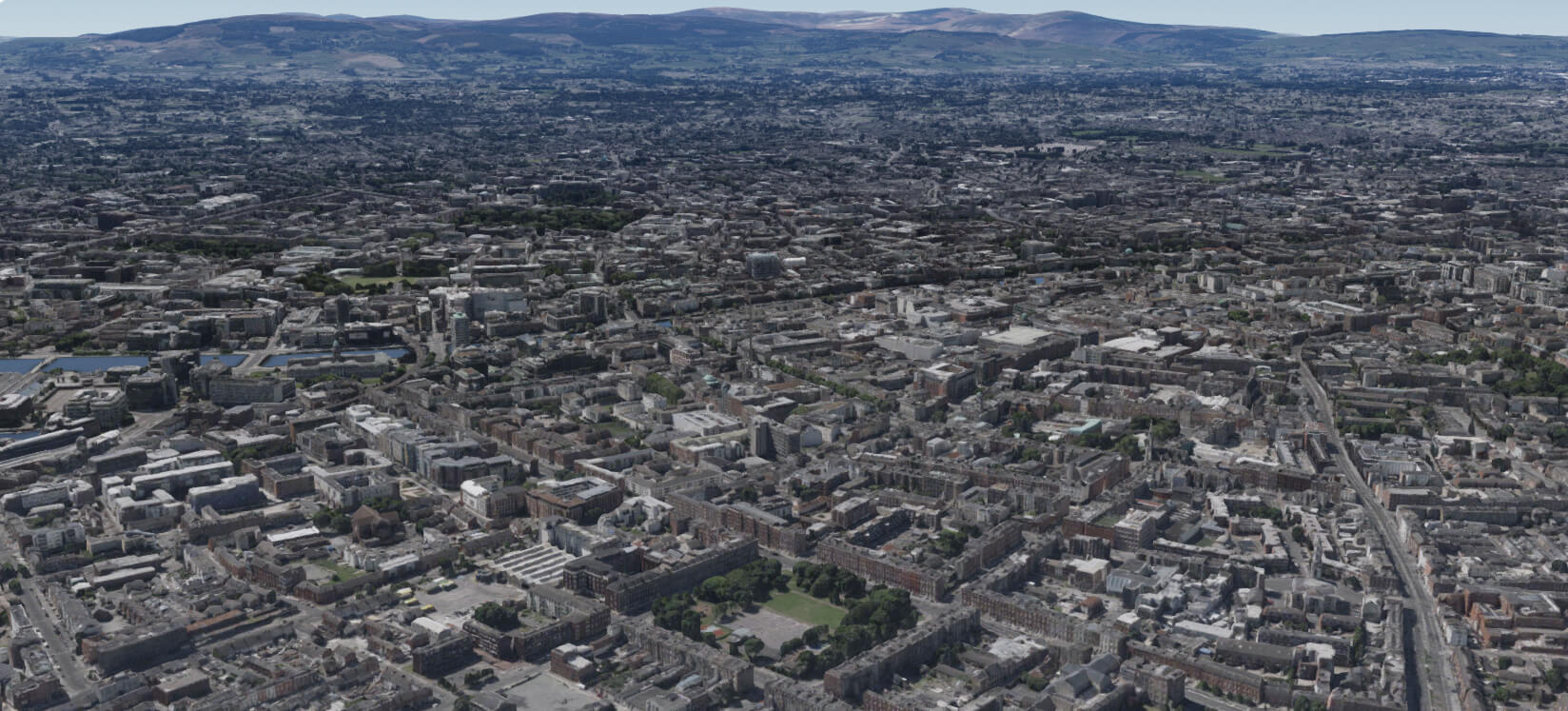
Dublin City is defined by its layered urban fabric. Georgian terraces sit alongside Victorian redbrick streets, industrial warehouses, docklands infrastructure and mid-century civic buildings. The River Liffey divides the city north and south, with a tight historic grain radiating outward from its quays. Plot widths are often narrow, streets are formally aligned, and many neighbourhoods operate within established conservation frameworks. Unlike suburban Dublin, the city is characterised by density, adjacency and architectural continuity.
As architects in Dublin City, our work ranges from the restoration of protected structures to feasibility studies for mixed-use development and the careful reorganisation of existing homes within tight urban sites. Projects such as North Circular Road involved the re-establishment of an 1882 terrace building as a single family dwelling through adaptation, extension and conservation. At Kings Inn Street, we undertook a feasibility study for additional floors to a historic concrete-framed building, working with Dublin City Council at pre-planning stage. Our urban renewal proposal in Ballybough examined how new vertical form might act as a landmark within an arterial city route. Across each project, contextual discipline and planning clarity are central.
We have a number of residential and commercial projects in Dublin City. Selected examples include:
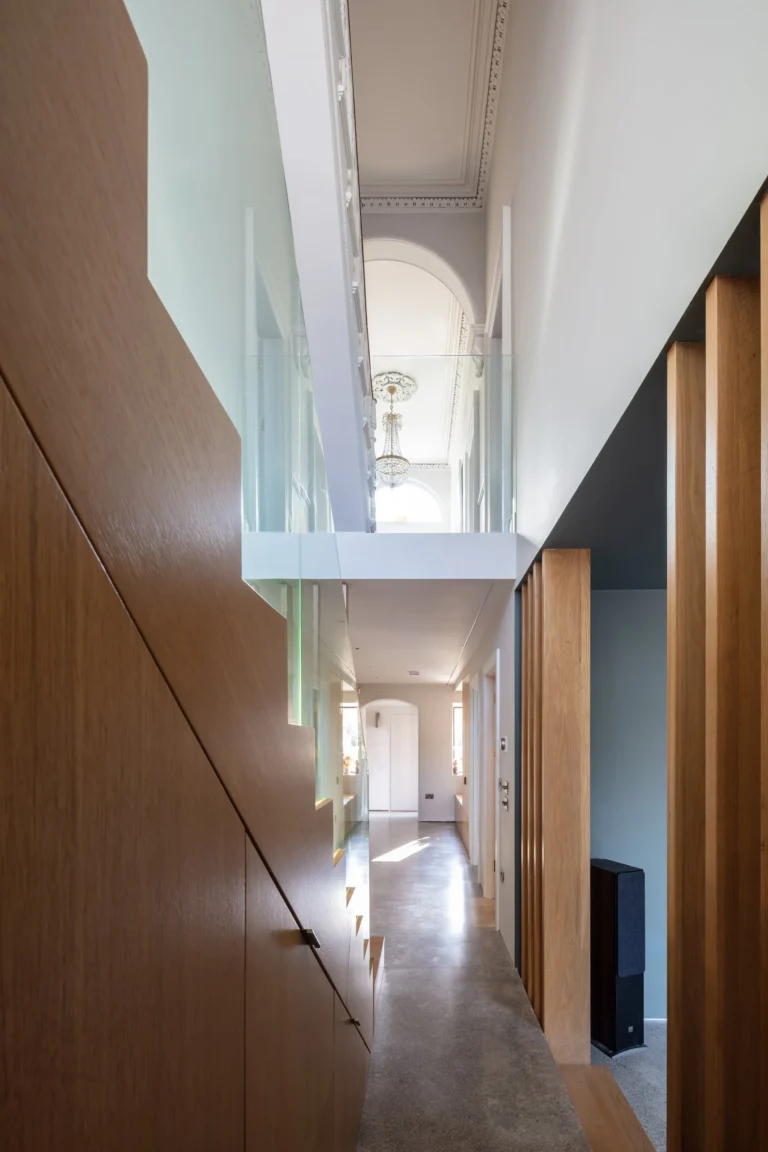
North Circular Road
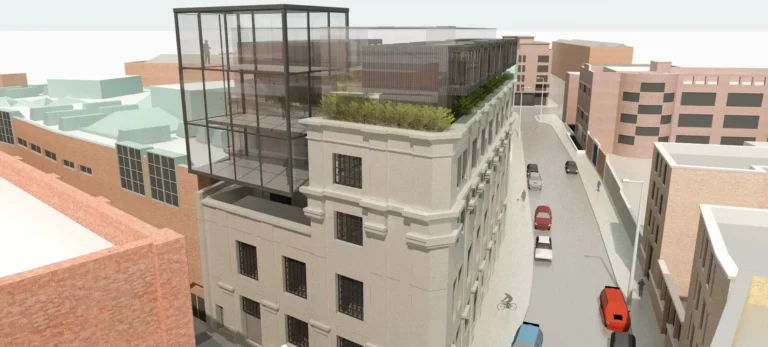
Kings Inn Street
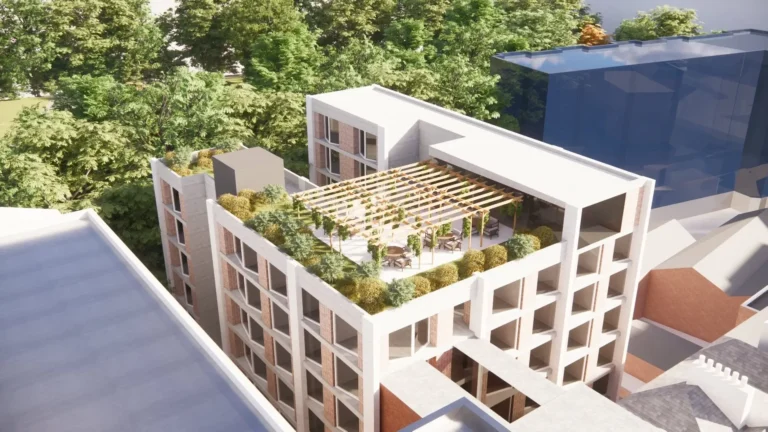
Iveagh Garden Hotel
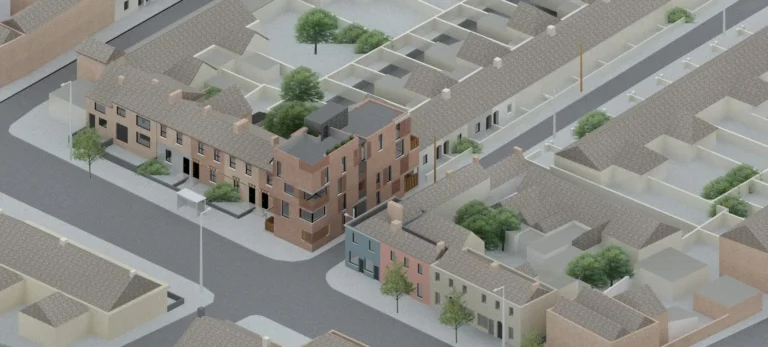
Urban Renewal





















Area Background / History
Architecture in Dublin City
Dublin City evolved from a medieval core along the Liffey into one of Europe’s most complete Georgian capitals during the 18th century. The formal terraces of the north and south inner city were laid out on strict plot divisions, typically narrow and deep, producing a rhythm of brick façades, parapets and vertical window proportions. The 19th century introduced industrial structures, railway infrastructure and redbrick suburban expansion beyond the canals.
Post-independence development introduced civic buildings and later mid-20th century apartment blocks, while the late 20th and early 21st centuries saw docklands regeneration and mixed-use schemes around the IFSC and Grand Canal Dock. Throughout, the underlying Georgian grain remains legible, particularly within Architectural Conservation Areas (ACAs) and streets containing protected structures.
This layered history creates both opportunity and constraint. Contemporary architecture in Dublin City must respond to established building lines, parapet heights, fenestration rhythms and party-wall conditions. It must also accommodate modern standards of fire safety, accessibility, environmental performance and density. The discipline required is one of measured intervention rather than stylistic assertion.
 © Microsoft, Bing Maps, & its data providers
Planning & Site Context
Planning a Project in Dublin City
Dublin City Council is the planning authority governing development within the city boundary. The Dublin City Development Plan establishes policy on height, density, conservation, public realm and climate resilience. Many neighbourhoods fall within Architectural Conservation Areas, and a significant number of buildings are listed as Protected Structures. Early engagement through pre-planning consultation is often invaluable in clarifying heritage expectations and scale parameters.
Urban sites typically present constraints of access, overlooking, party-wall adjacency and limited rear space. In conservation contexts, interventions to façades, roof profiles and street-facing elements are carefully scrutinised. Internally, however, there is often scope to reorganise circulation, introduce light wells or reconfigure basement levels where heritage impact is minimal and clearly justified.
Period Homes
Urban Constraints
Environmental Considerations
Flood risk mapping along the River Liffey and its tributaries informs development in certain districts. Urban heat island effects and limited private green space increase the importance of passive design measures, cross-ventilation and high-performance envelopes. Retrofit is especially relevant in Dublin City, where much of the housing stock predates modern energy standards. Upgrading existing buildings is often both environmentally and culturally preferable to replacement.
Pre-planning dialogue with Dublin City Council can de-risk projects by clarifying acceptable height, heritage intervention and material strategy before formal submission. For clients undertaking complex urban projects, this stage provides valuable certainty.
Our Approach in Dublin City Projects
Our work as Dublin City architects is grounded in close reading of context. We analyse street rhythm, structural logic and urban history before drawing. Whether restoring a protected terrace, reconfiguring a city dwelling or exploring additional floors to an existing structure, we prioritise spatial clarity and long-term adaptability.
Planning strategy is integrated from the outset. We engage with development plan policy, conservation guidance and technical consultants early in the process. This reduces friction at application stage and aligns design ambition with regulatory reality.
Environmental performance is addressed as an architectural question rather than an afterthought. Daylight, thermal comfort, material durability and energy efficiency are considered in parallel with heritage sensitivity and urban scale.
As architects working in Dublin City, we offer a full service from feasibility and pre-planning through detailed design, tender and construction oversight. Our role is to guide projects calmly through complexity while protecting architectural integrity. If you are considering a project within the city, we welcome a conversation at an early stage.